
Welcome to the Majorelle Garden in Marrakech
A walled blue garden of cobalt buildings, tall cacti and quiet water, shaped by a painter from 1923 onward and kept alive since 1980 by the cultural foundation tied to Yves Saint Laurent and Pierre Bergé. We are an independent guide. We do not sell tickets.
01 Where it is.
Rue Yves Saint Laurent, Marrakech 40090, in the city centre, walkable from the medina edge and easy to pair with a half-day route.
02 What it holds.
The garden itself, the Musée Pierre Bergé des Arts Berbères inside it, and the Musée Yves Saint Laurent Marrakech nearby. Villa Oasis stays private.
03 Who runs it.
The foundation carrying the Saint Laurent and Bergé legacy. We are not affiliated with it and we take no cut from any operator.
04 What we do.
We write about the history, the architecture and the heritage, and we explain how to plan a visit that fits your own trip.
What the Majorelle Garden actually is
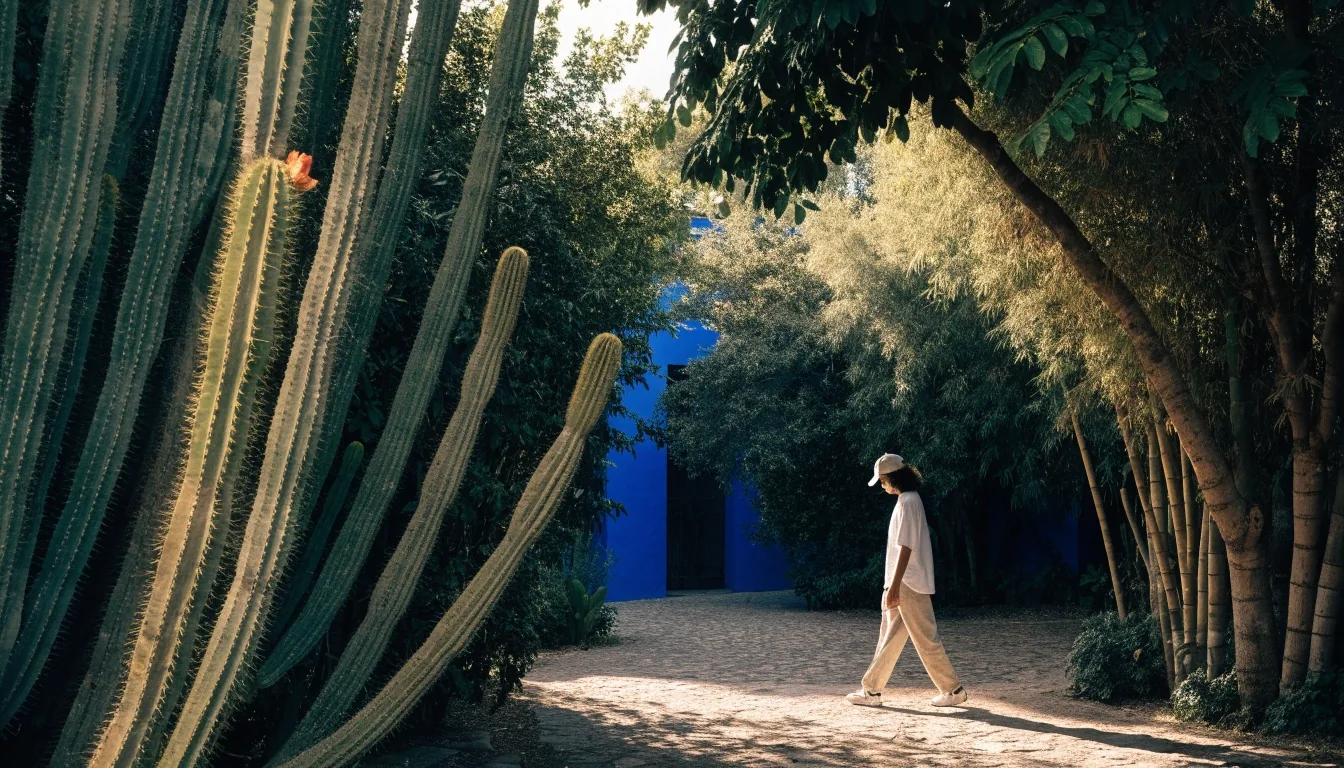
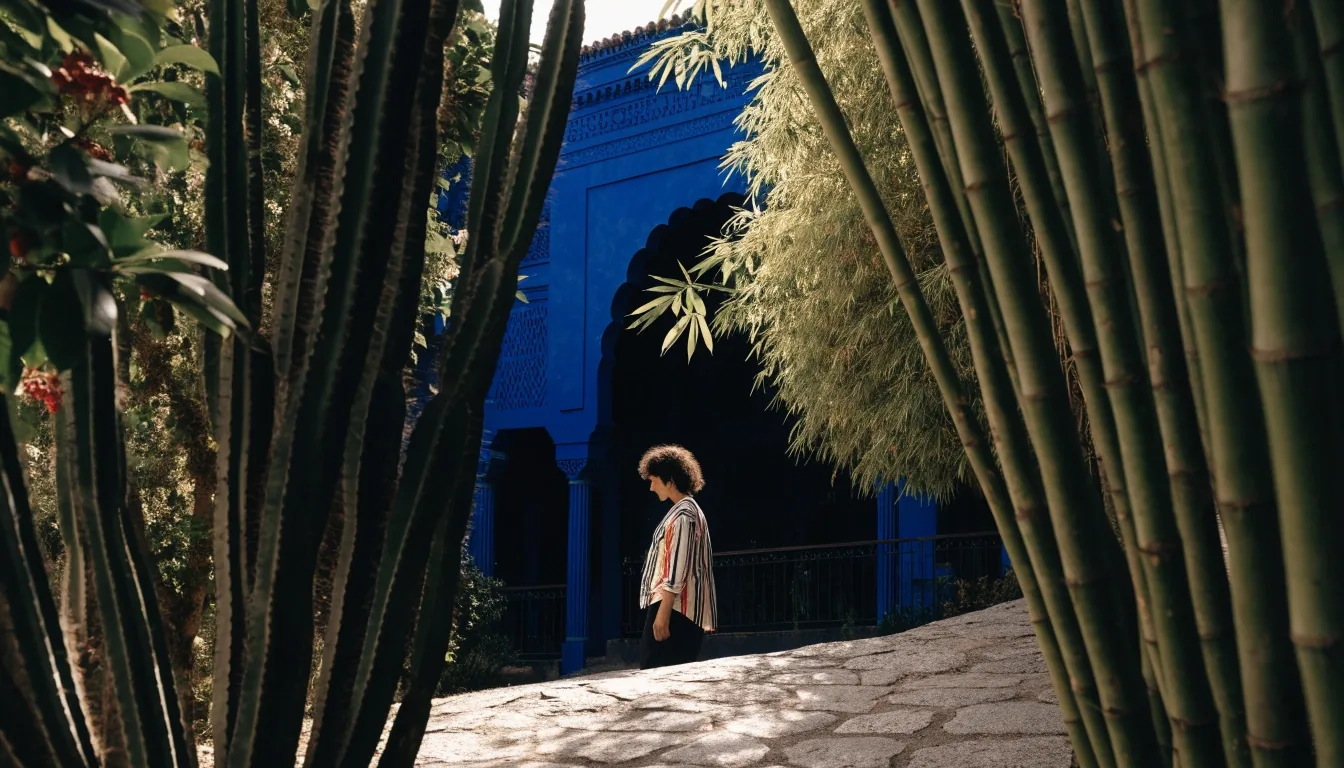
It is a historic garden, not a theme park. The layout rewards slow walking: a long central pool, shaded paths, and planting arranged for contrast rather than symmetry. Jacques Majorelle was a painter first, and the garden reads like a composition, with strong color used the way he used it on canvas.
You will see palms, bamboo, cacti and water lilies pressed close together. The effect is dense and layered, which is why photographs taken here rarely look like photographs from anywhere else in the medina.
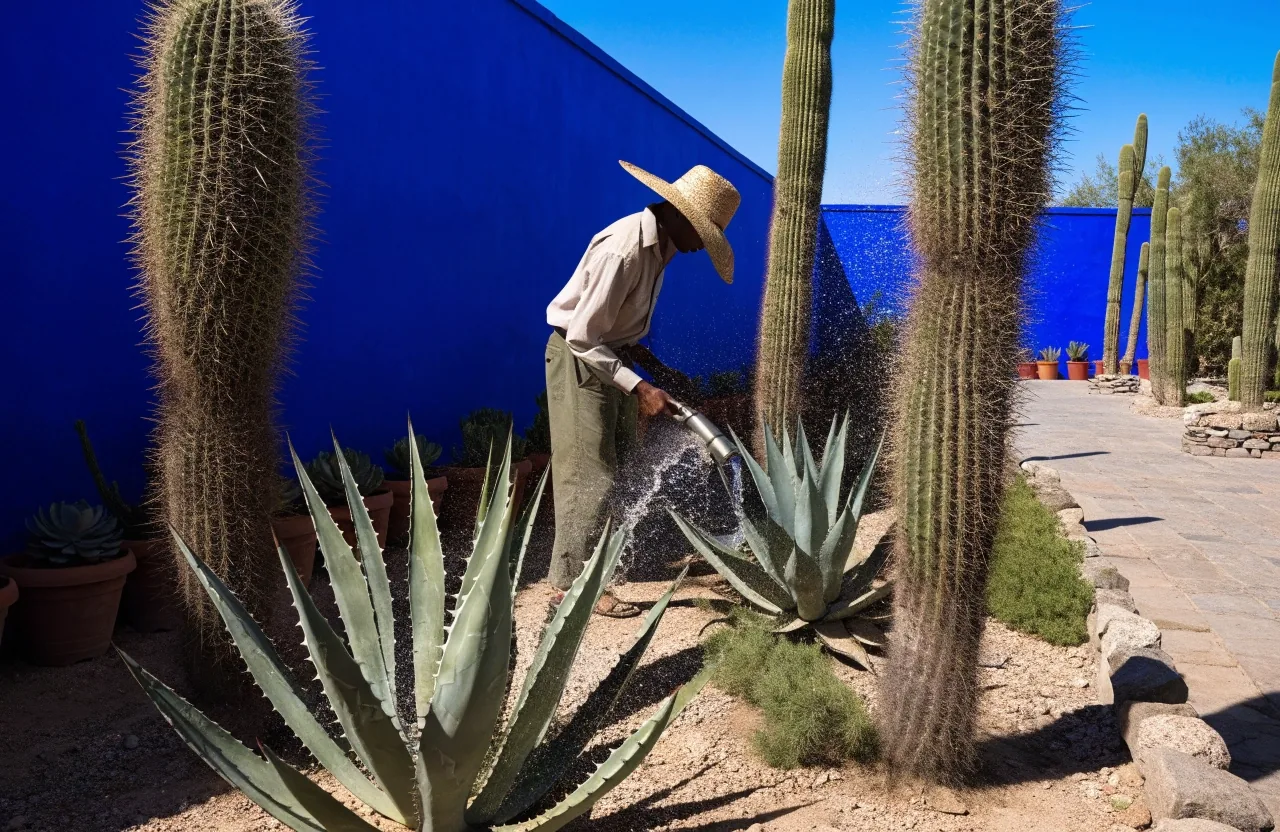
Cactus court, midday
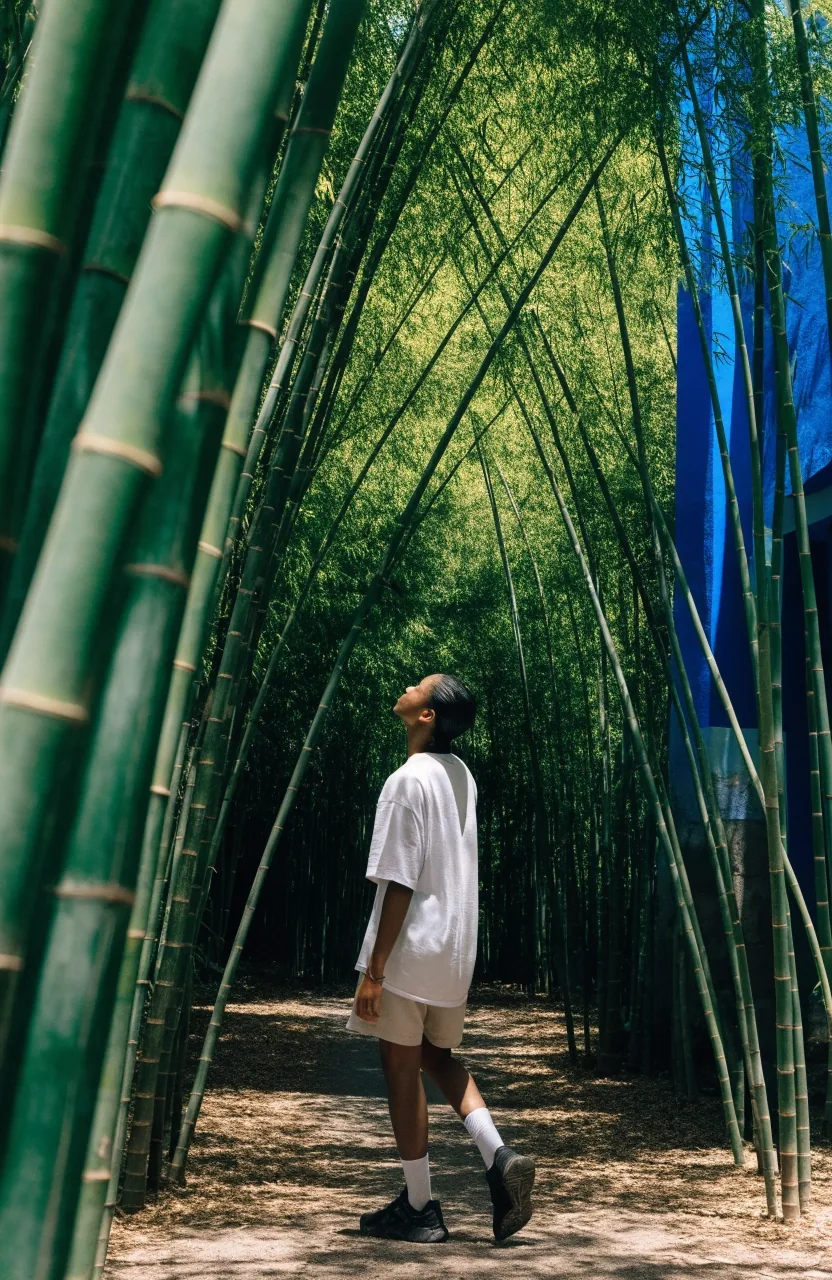
Bamboo alley, overhead
Why the color matters
The intense blue found on the studio building and garden structures is now called Majorelle blue. It is a pigment linked to the painter's own palette, and it gives the site a visual signature that is hard to mistake. Against the blue, the greens of the plants and the ochre of the walls sharpen.
Visitors often come expecting one famous wall and leave noticing how the color shifts through the day as light moves across the blue garden. That change is part of the reason people return.
Jacques Majorelle and the origins
Majorelle was born in Nancy and settled in Marrakech, where he bought land in 1923. Over the following decades he developed the garden as both a studio and a refuge, and he opened it to the public in 1947. He planted it himself, informed by his travels and his eye for botany.
After his death the garden fell into decline, and by the 1970s it was under threat from development pressure. The story of how it survived is covered in more depth on our history page.
Read the garden's history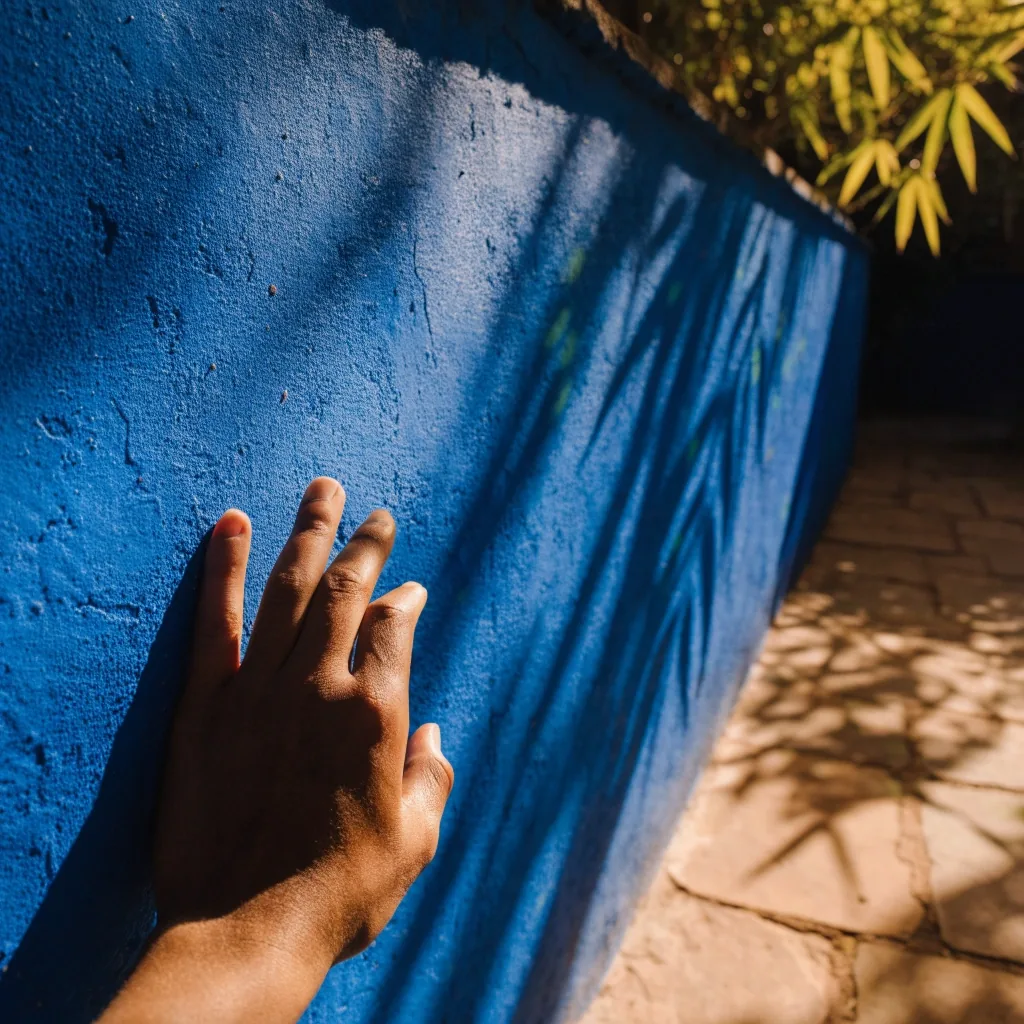
In 1980, Yves Saint Laurent and Pierre Bergé acquired the garden to protect it. Their restoration work brought back the planting and the structures, and their connection to Marrakech shaped the site's modern identity. Saint Laurent had a long relationship with the city, and the garden became part of his personal and professional life there.
Today the foundation that bears the legacy operates the garden alongside two museums. Our page on Saint Laurent and Bergé covers the fashion history and the museum complex.
01 1980 — the rescue.
Saint Laurent and Bergé buy the garden while development pressure is closing in, and begin restoring planting and structures.
02 The city connection.
Marrakech was a working home for Saint Laurent, and the garden sat inside that life rather than beside it.
03 The legacy today.
The foundation runs the garden alongside the Berber museum and the Yves Saint Laurent museum in Marrakech.
Architecture worth slowing down for
The studio building inside the garden is commonly described as Art Deco, with strict geometric lines that stand against the loose, exuberant planting. Paul Sinoir designed it for Majorelle, and the result is a modernist edge inside a Moroccan setting.
Look at the thresholds, the railings, and the way windows frame the garden. Travelers interested in architecture often spend more time here than they planned, because the details reward close looking rather than a quick photograph.
See the architecture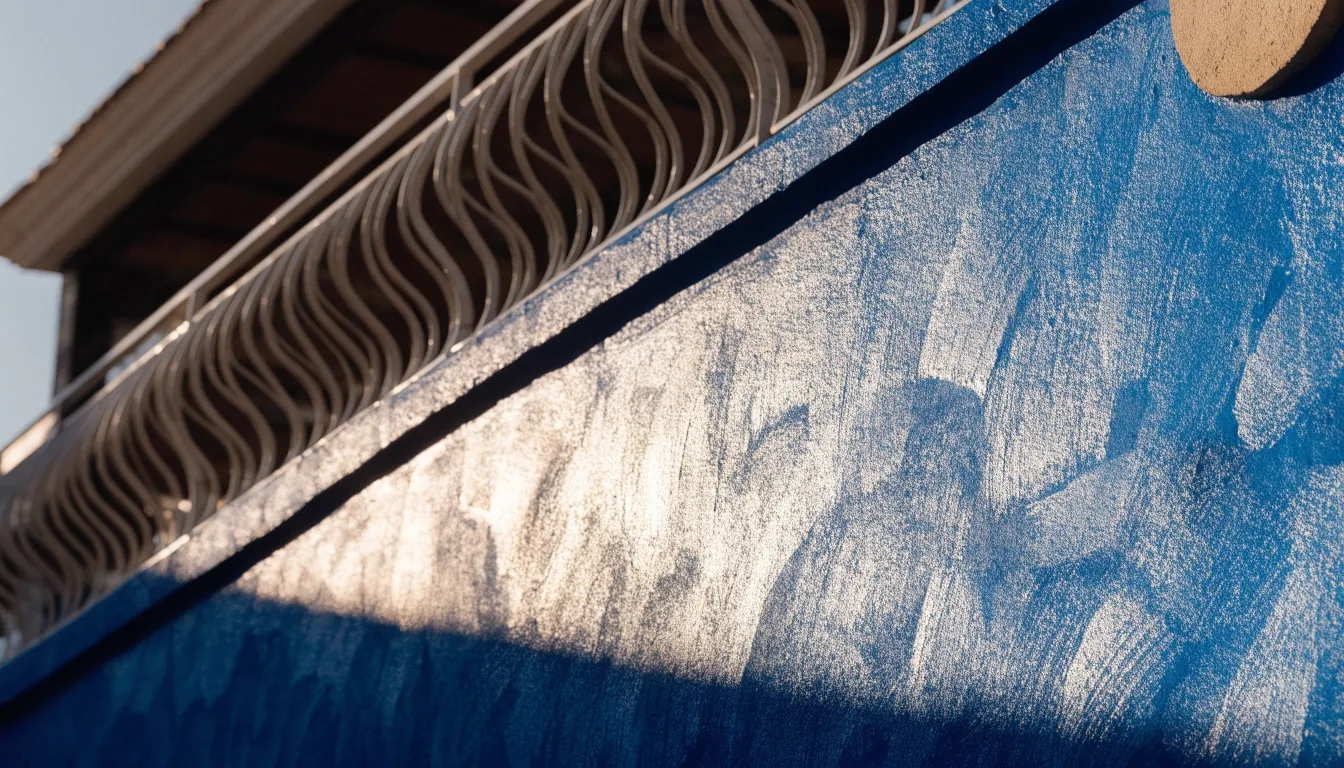
Blue wall and railing, late light
Planning your timing
Marrakech heat shapes every itinerary, and the garden is no exception. Early morning tends to be cooler and calmer, while midday brings stronger light and longer waits. The garden's central location makes it easy to pair with other stops, which is useful if you are building a half-day route.
There is no single best time for everyone; it depends on your tolerance for heat and crowds.
The three parts of a visit
Most people arrive thinking there is one garden. In practice the complex includes the garden itself, the Musée Pierre Bergé des Arts Berbères inside the garden, and the Musée Yves Saint Laurent Marrakech nearby.
Each takes time, and each tells a different part of the story: Amazigh and Berber material culture in one, couture and design in the other, and living botany all around. Villa Oasis, the private residence, is not part of the public visit. Knowing that in advance saves confusion at the gate.
Living botany
The garden itself
The pool, the paths, the cacti and the palms. Roughly an hour at a relaxed pace, more if you stop to look.
Amazigh and Berber culture
Musée Pierre Bergé des Arts Berbères
Inside the garden grounds, covering material culture from across Morocco. Allow extra time if you read the displays.
Couture and design
Musée Yves Saint Laurent Marrakech
Nearby rather than inside, focused on the designer's work and the house he built in the city.
Is it worth it?
The honest answer is that it depends on what you want from it. If you are looking for a quiet botanical walk with genuine architectural interest, the garden delivers. If you want a fast photo stop, you will still get the photo, but you will miss most of what makes the site coherent.
Heritage framing matters here as much as the visual appeal, because this is a preserved historic garden under real urban pressure. Read the history before you go and the visit changes.
Photography and etiquette
Photography is part of why the garden is famous, and most visitors take pictures. The practical constraints are the same as anywhere busy in Marrakech: narrow paths, shared viewpoints, and other people trying to enjoy the space.
Move aside after you take a shot, and avoid blocking the pool edge. If you want the blue buildings without a crowd in frame, arrive near opening. Respect any posted restrictions, and treat the garden as a garden rather than a backdrop.
Browse the photo gallery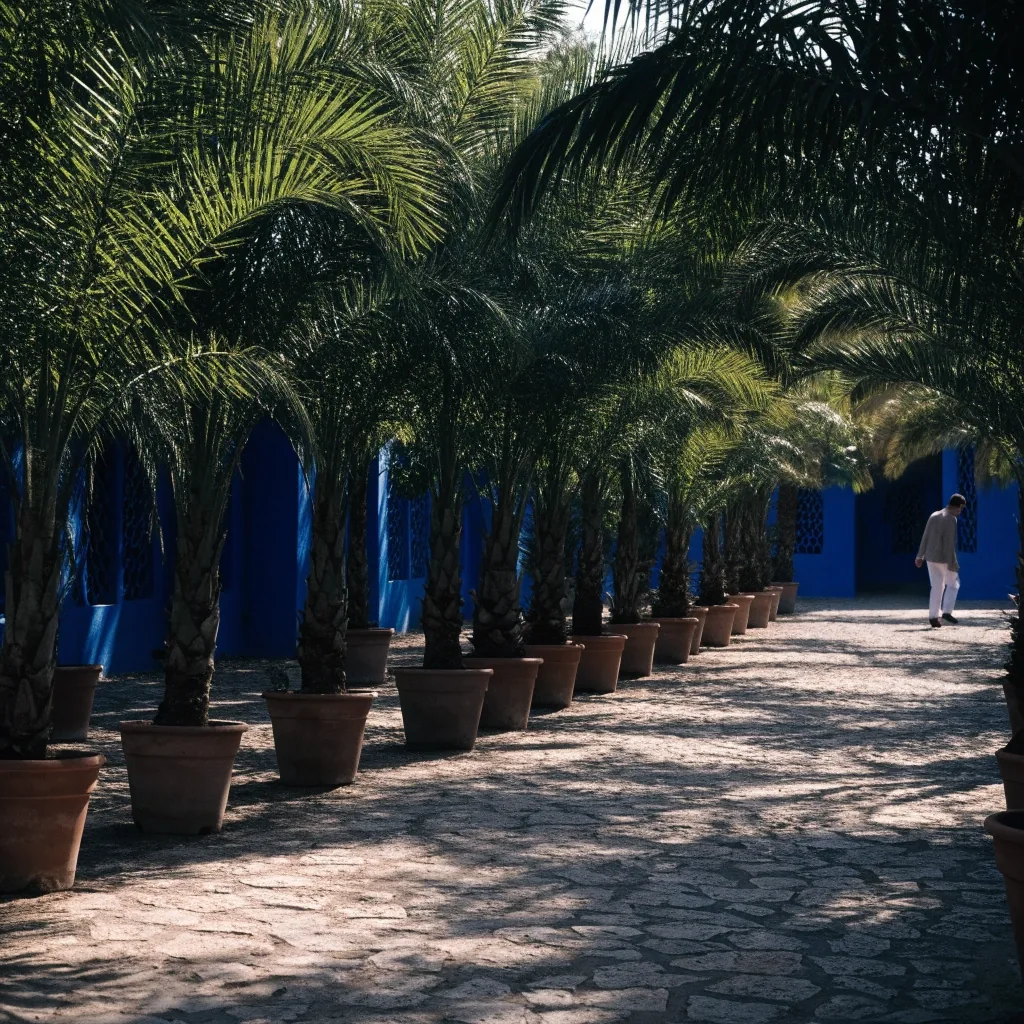
Potted palms, mid-morning path
What we do and do not do
We are an independent guide. We publish articles on the history, architecture and heritage of the site, and practical information for visitors. We do not sell tickets, we do not run tours, and we are not affiliated with the foundation that operates the garden.
That means our job is to explain clearly and let you decide how to plan. If something changes on the ground, we would rather tell you what we know than pretend certainty. Our editorial desk answers questions Monday to Friday, 9:00 AM to 6:00 PM (GMT+1). Garden visiting hours vary by season, so check the official garden schedule before you travel.
A note on the wider context
The garden is often used as a case study in preserving historic gardens in Morocco, and the debates around conservation and urban growth are real. Private patronage saved this site in 1980, and that model has shaped how it is run today.
Understanding that context makes a visit more than a checklist stop. It also explains why the garden feels both intimate and monumental at the same time, and why the blue garden keeps pulling people back to Marrakech.
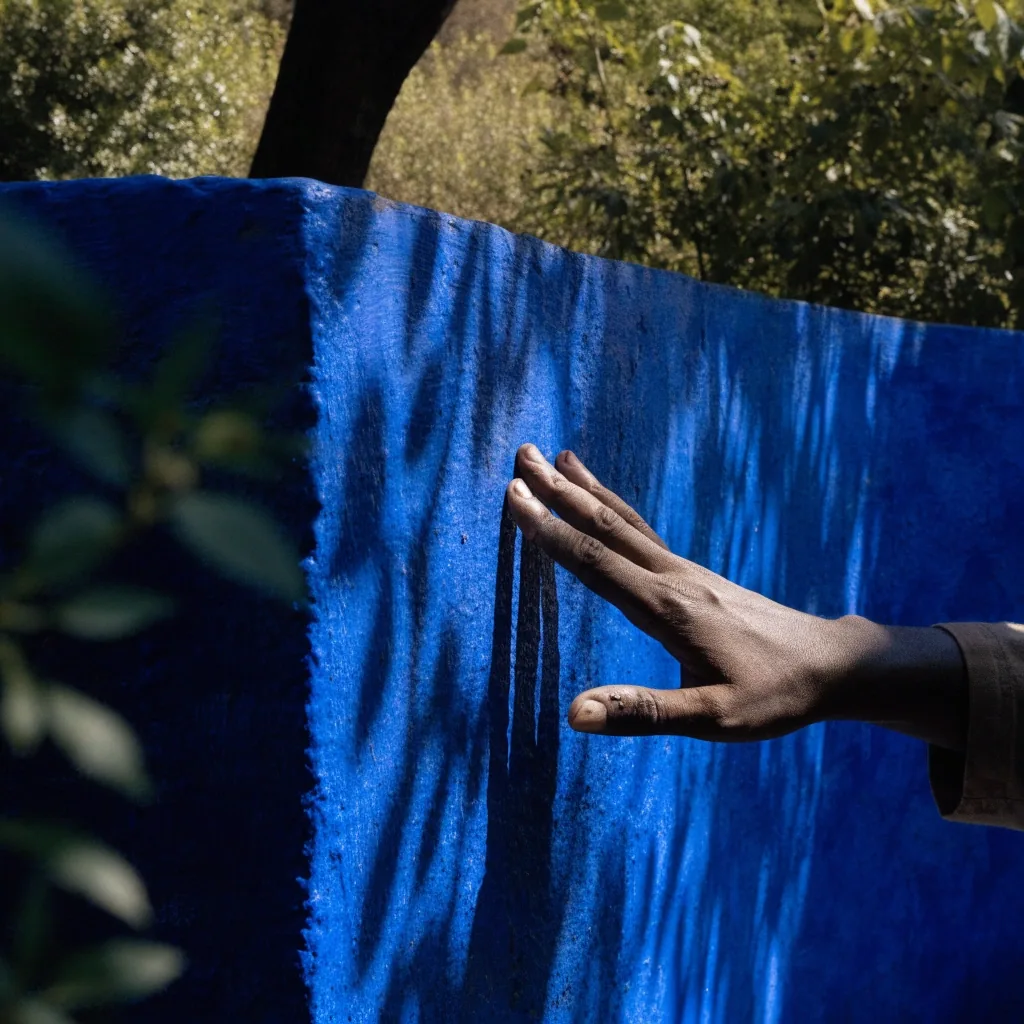
Wall fragment, deep shade
Questions visitors ask
Short answers to the things that come up most often before a first visit. If your question is not here, write to us.
When is the best time to visit Jardin Majorelle?
Early morning is generally cooler and less crowded. Midday brings stronger light and longer waits. The right time depends on your heat tolerance and how much time you want inside.
How long does it take to see the garden and both museums?
The garden alone takes roughly an hour at a relaxed pace. Adding the Musée Pierre Bergé des Arts Berbères and the Musée Yves Saint Laurent Marrakech turns it into a half-day. Plan for more if you like to read the displays.
What is the difference between the garden, the Berber Museum and the YSL Museum?
The garden is the living site itself. The Musée Pierre Bergé des Arts Berbères is inside the garden and covers Amazigh and Berber material culture. The Musée Yves Saint Laurent Marrakech is nearby and focuses on couture and design.
Is Villa Oasis part of the public visit?
No. Villa Oasis is a private residence and is not open as part of the standard visit.
Do you sell tickets?
No. We are an independent guide and provide travel information only. Tickets come from the garden's own official channels.
Where to start reading
If you have five minutes, read the history page first, then the visitor tips. If you have longer, the architecture page explains the design decisions, and the Yves Saint Laurent page covers the restoration and the museums.
The photo gallery gives you a visual sense of the place before you arrive. Start with whatever matches your reason for going. There is no correct order, only the one that answers your questions.
Five minutes
History, then visitor tips. Enough to plan the day around the garden.
An afternoon
Add architecture for the studio building and design decisions, and Saint Laurent for the restoration and museums.
Before you pack
Look through the gallery so you know which views matter to you, and send us a question if something is still unclear.