
Marrakech heritage, 1923 to now
The History of the Majorelle Garden
The Majorelle Garden exists because one painter wanted a place to work and plant, and because two other men refused to let it be demolished. The story runs from a land purchase in 1923 through four decades of cultivation, a period of decline, and a rescue in 1980.
1923 Jacques Majorelle buys land on the edge of Marrakech and begins planting.
He was not a landscape architect by training. He planted with a painter's eye for color and contrast, which is why the garden reads as a composition rather than a collection.
1947 The garden opens to the public and joins the cultural life of the city.
Visitors came for the color and the planting. Majorelle continued to work and plant until his death, after which the garden entered a different phase entirely.
1970s Maintenance lapses; development pressure closes in on the surrounding land.
Historic gardens depend on continuous care, and care depends on money and commitment. The garden came close to being lost as a garden.
1980 Yves Saint Laurent and Pierre Bergé acquire the garden to save it.
Restoration brought the planting and structures back, and the garden regained the coherence it had under Majorelle. It is the reason the site exists in its current form.
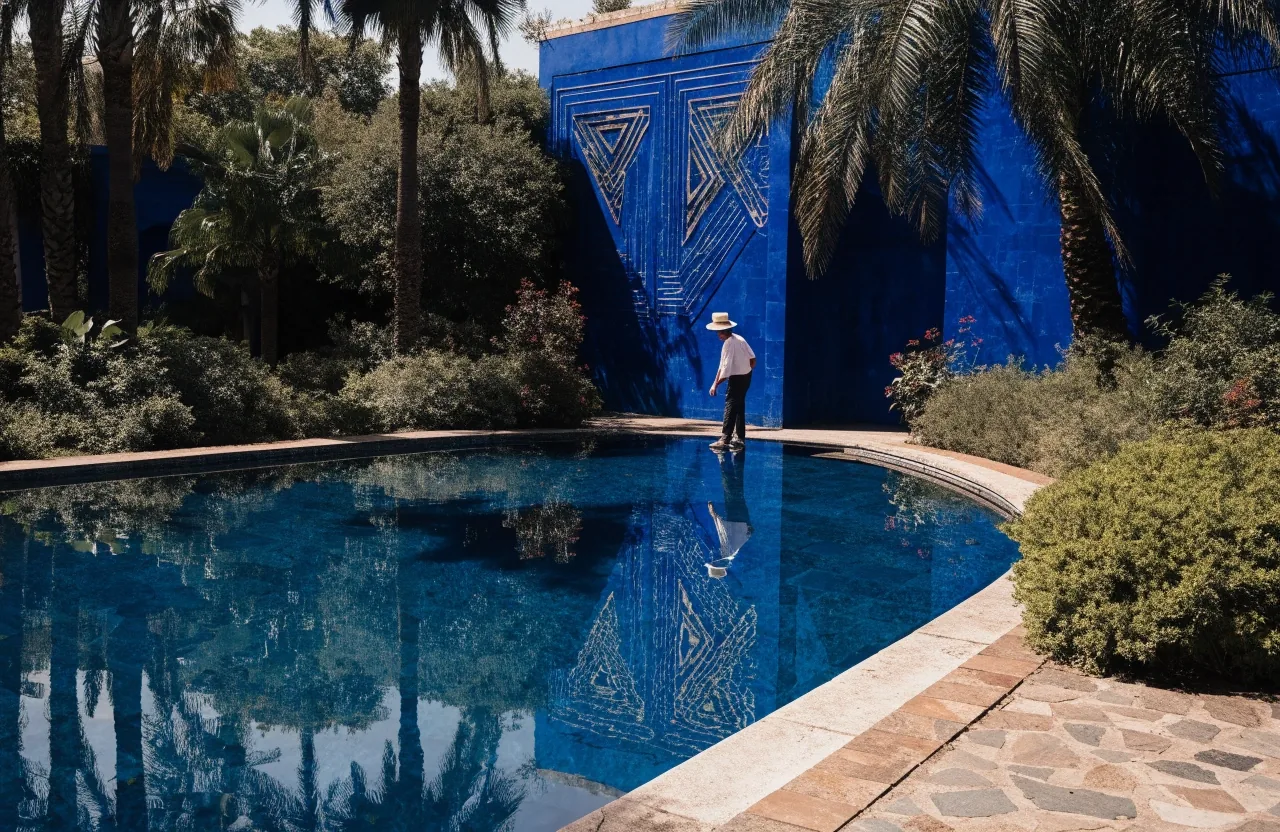
The pool and the studio wall, seen today.
A painter buys land in Marrakech
Jacques Majorelle arrived in Morocco in the early twentieth century and eventually settled in Marrakech. In 1923 he bought land on the edge of the city, then developed it over roughly four decades. He was not a landscape architect by training. He was a painter who planted with a painter's eye for color and contrast, and that is why the jardin majorelle reads as a composition rather than a collection.
What this means for your visit
- The planting groups are deliberate, not naturalistic — look for repeated color blocks rather than a botanical collection.
- The garden was never a formal French or Islamic garden; its structure comes from a painter's framing.
- The 1923 land purchase is the start of the whole sequence you walk through today.
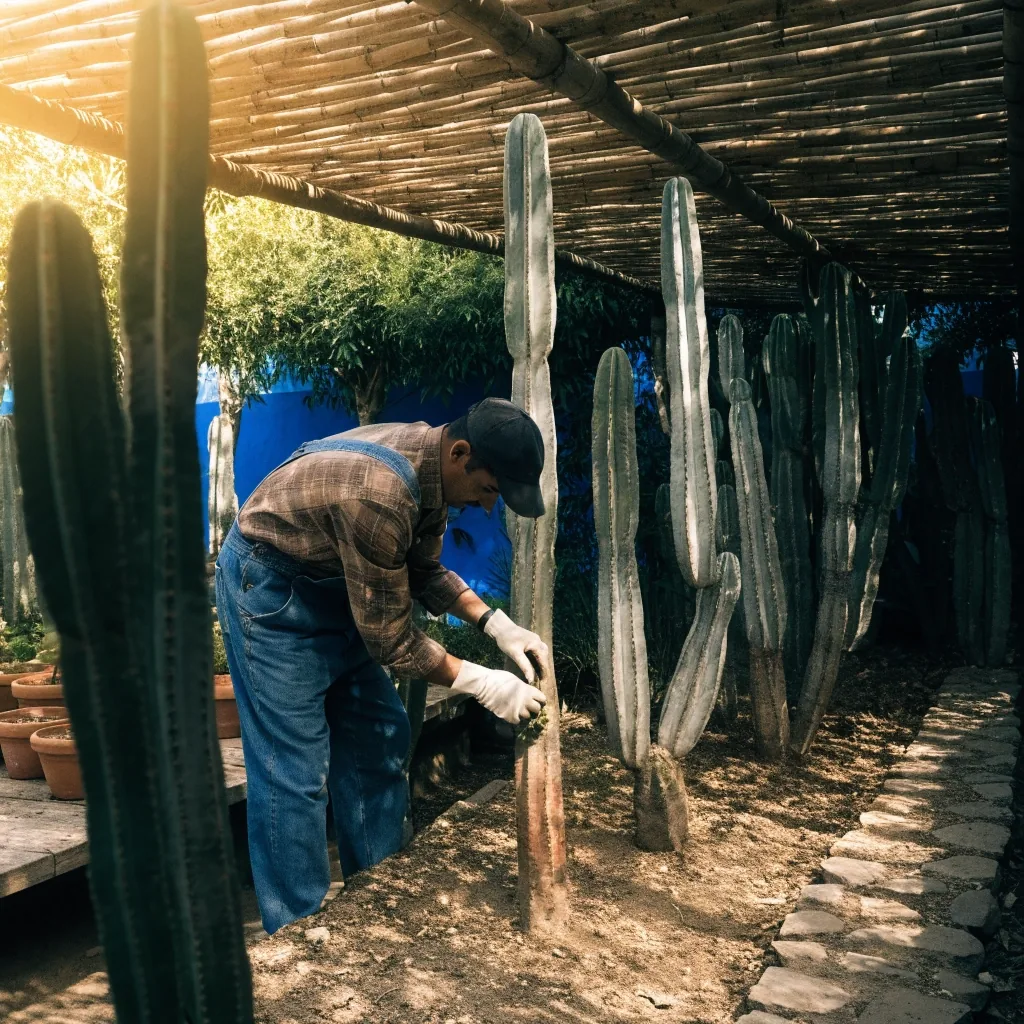
Layered planting under the bamboo ceiling.
Building the garden over four decades
The garden grew in stages. Majorelle introduced palms, bamboo, cacti, and water features, and he arranged them in dense, layered groups. A long central pool gave the space a spine. The planting was informed by his travels and his botanical interests, and the result was unlike the formal gardens around it. By the 1940s it had become a recognizable landmark, known for its color as much as its plants.
- Structure
- A long central pool runs the length of the garden and works as its spine, with planting massed on both sides.
- Planting
- Palms, bamboo, cacti and water plants, grouped densely rather than spread thinly, so color reads in blocks.
- Building
- Majorelle's studio villa, painted in the deep blue that later took his name, still anchors the site.
Opening to the public in 1947
Majorelle opened the garden to the public in 1947. It was already a personal project with a public dimension, and the opening made it part of the city's cultural life rather than a private retreat. Visitors came for the color and the planting. The painter continued to work and plant until his death, after which the garden entered a different phase entirely.
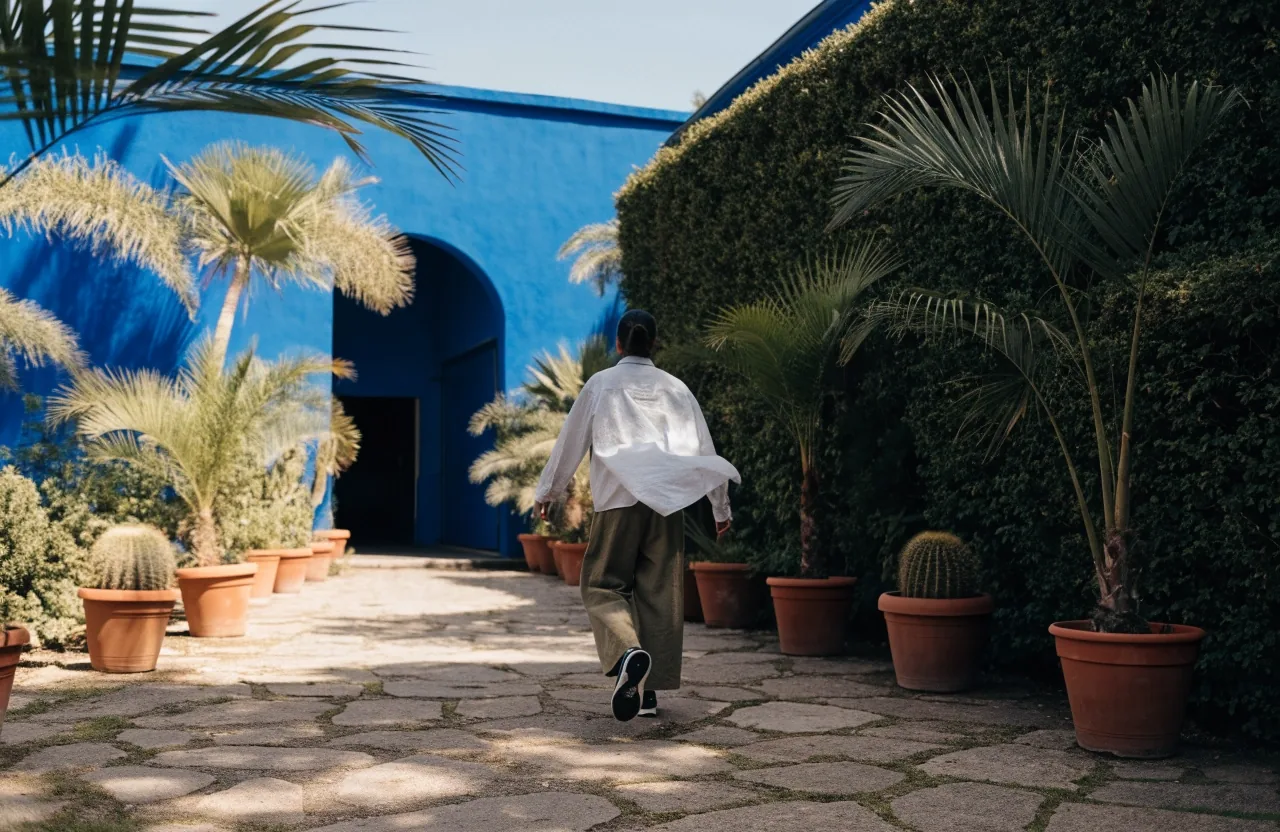
The path toward the blue villa, midday.
What changed in 1947
- The garden became a place the city could visit, not only the painter and his guests.
- Majorelle kept working in it — planting and painting continued side by side after the opening.
- Its reputation grew for the color as much as the plants, which is why it was photographed so often.
Decline and the threat of development
After Majorelle's death the garden declined. Maintenance lapsed, and by the 1970s the site was under serious pressure from development interest in the surrounding area. This is a familiar pattern for historic gardens: they depend on continuous care, and care depends on money and commitment. The garden was close to being lost as a garden. That possibility is central to its modern identity.
Why gardens slip
A planted garden is not a monument. Without pruning, irrigation and replanting, a designed composition unravels within a few seasons — which is exactly what happened here between Majorelle's death and 1980.
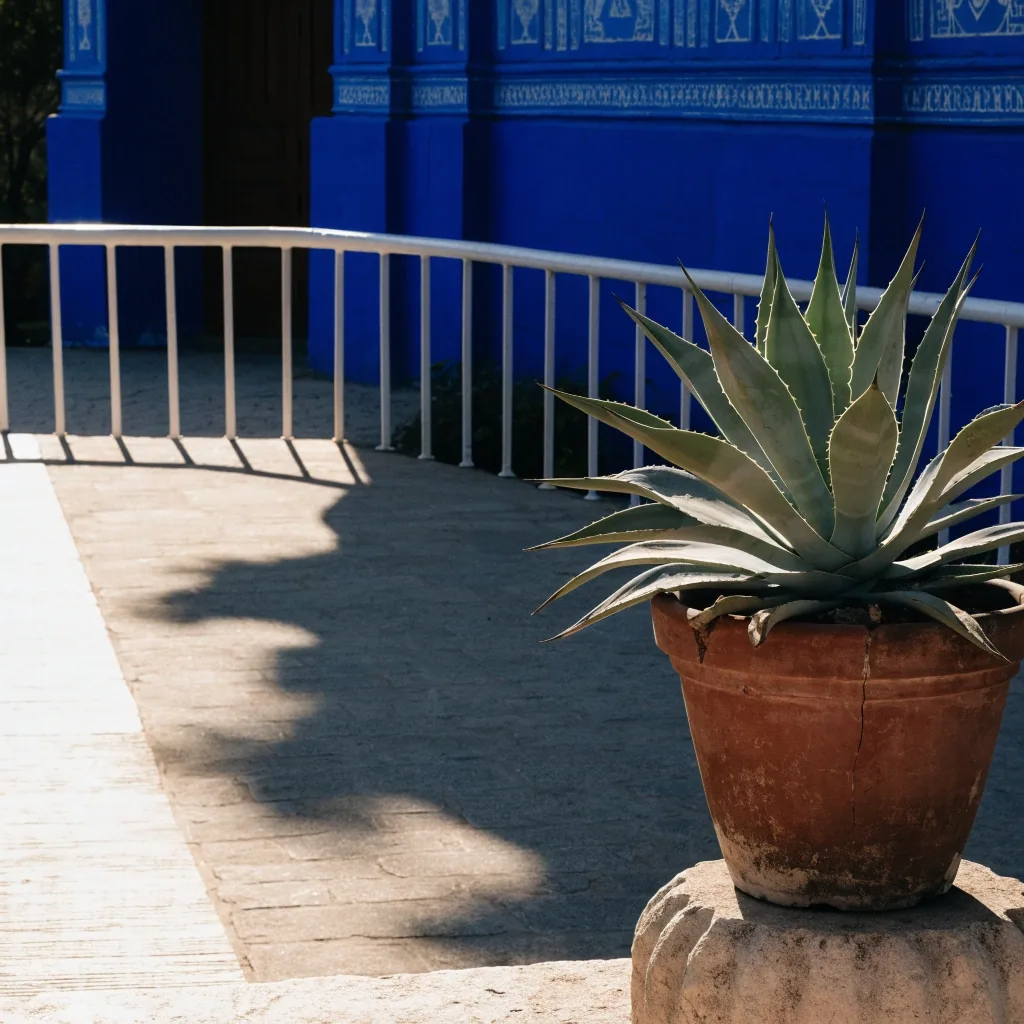
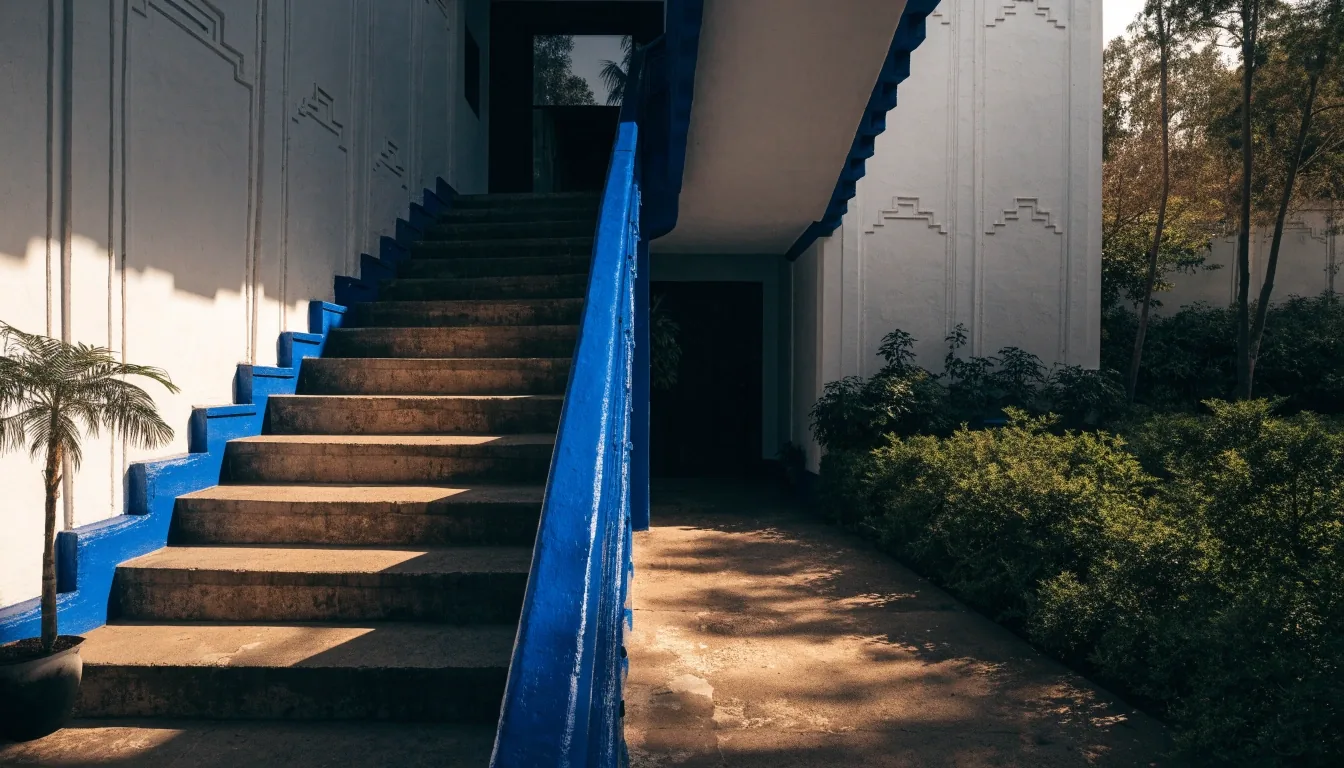
Cobalt plaster and Art Deco railing, raking light.
The 1980 rescue
In 1980, Yves Saint Laurent and Pierre Bergé acquired the garden to save it from development. Their intervention was decisive. Restoration brought the planting and structures back, and the garden regained the coherence it had under Majorelle. The rescue is not a small footnote. It is the reason the site exists in its current form, and it set the template for how it has been run since.
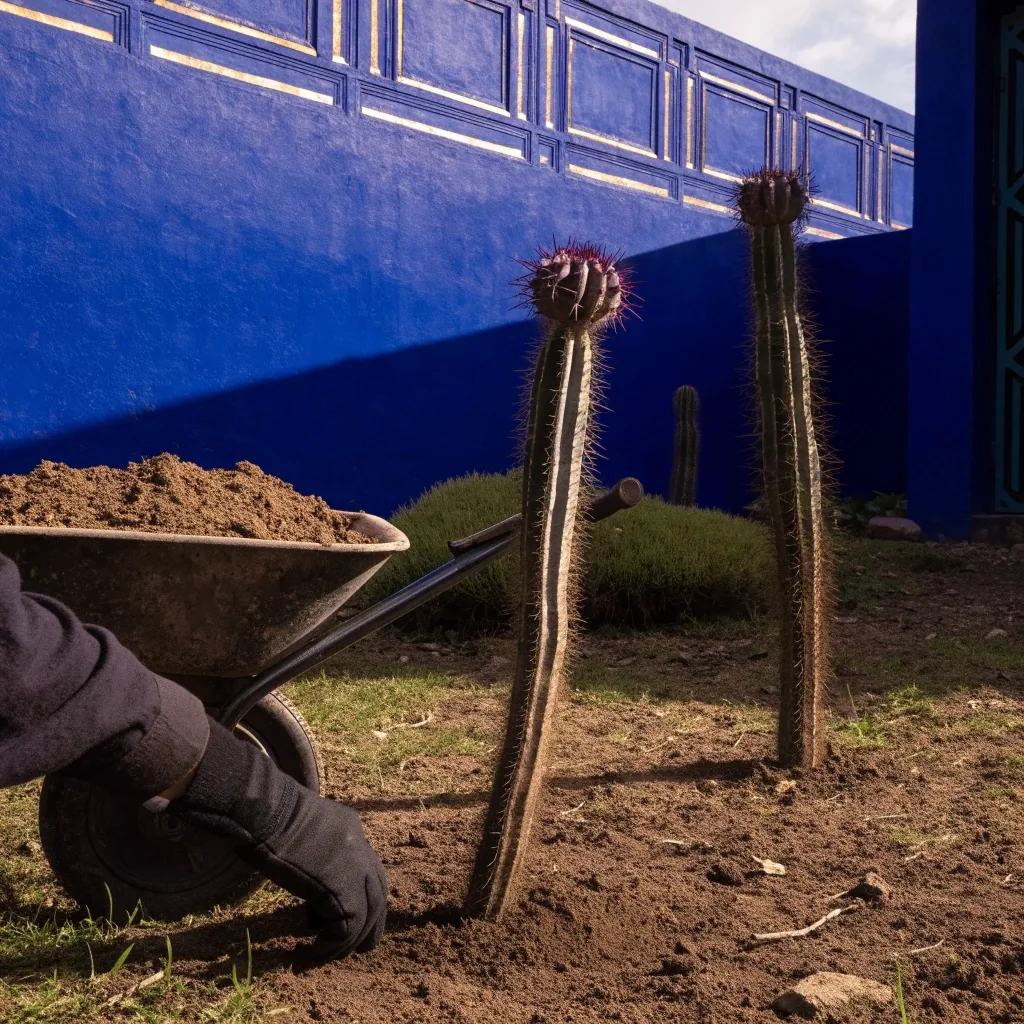
The cactus court, replanted and maintained.
Restoration as a long process
Restoration was not a single event. It involved replanting, structural work, and decisions about how faithful to be to the original design. The blue that defines the site was re-established, and the studio building was treated as a piece of architecture rather than a shed. The work continued over years, and the garden you walk through now is the product of that sustained attention rather than a quick fix.
For a visitor, the practical read is simple: what looks effortless today is the result of repeated cycles of planting, pruning and repair. Majorelle blue on the walls is a maintenance decision as much as an aesthetic one — plaster in Marrakech sun has to be repainted to hold that depth of pigment.
The blue garden you photograph is therefore never a finished object. It is a design that is continuously kept, and the 1980 acquisition is what made that continuous care possible again.
From private garden to heritage institution
What began as one painter's project became a foundation-led cultural institution. The garden is now part of a wider complex that includes the Musée Pierre Bergé des Arts Berbères and the Musée Yves Saint Laurent Marrakech. Private collecting turned into institutional preservation, and the site is interpreted for visitors rather than simply maintained. That shift changed how the garden is experienced, from a personal garden to a documented heritage site.
It also changed what a visit means. You are no longer walking through a private artist's retreat that happens to be open; you are walking through a site with conservation decisions, interpretation panels, and a public programme behind it. Knowing that explains the ticketing, the timed entry and the staffing you meet at the gate.
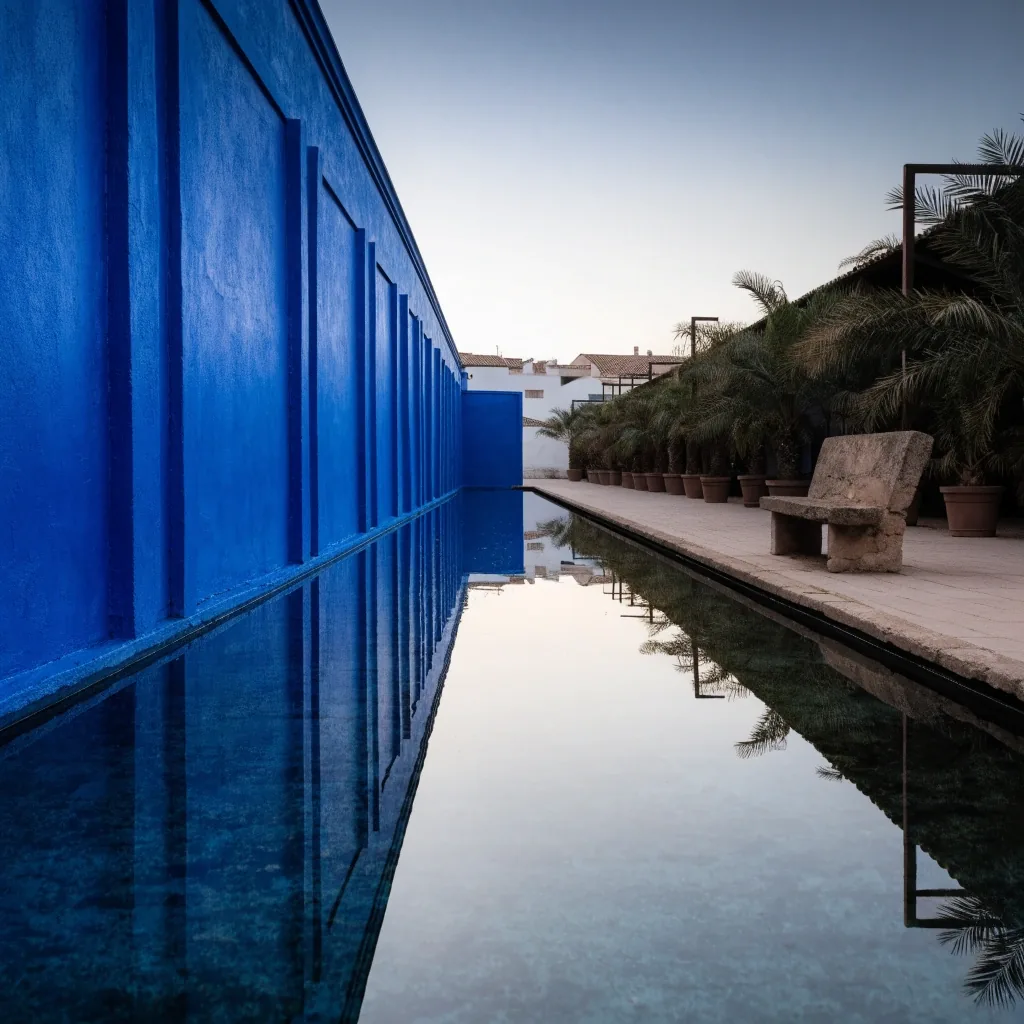
The pool walk at opening hour.
Why the history matters for visitors
Knowing the sequence changes what you notice. The blue is not decoration; it is a signature that survived a restoration. The dense planting is not random; it is a painter's arrangement maintained across decades. The threat from development explains why the site feels protected and curated. A visitor who reads the history sees more than a photo opportunity, and that is the point of this page.
Read the site in this order
-
Architecture & Design
How the villa, the studio and the painted walls were built and what they owe to Art Deco.
-
Yves Saint Laurent & Pierre Bergé
Their ownership, the restoration they funded, and the two museums that followed.
-
Visitor Tips & Practical Guide
When to go, what to expect at the gate, and how to plan around the busiest hours.
Heritage gardens in Morocco
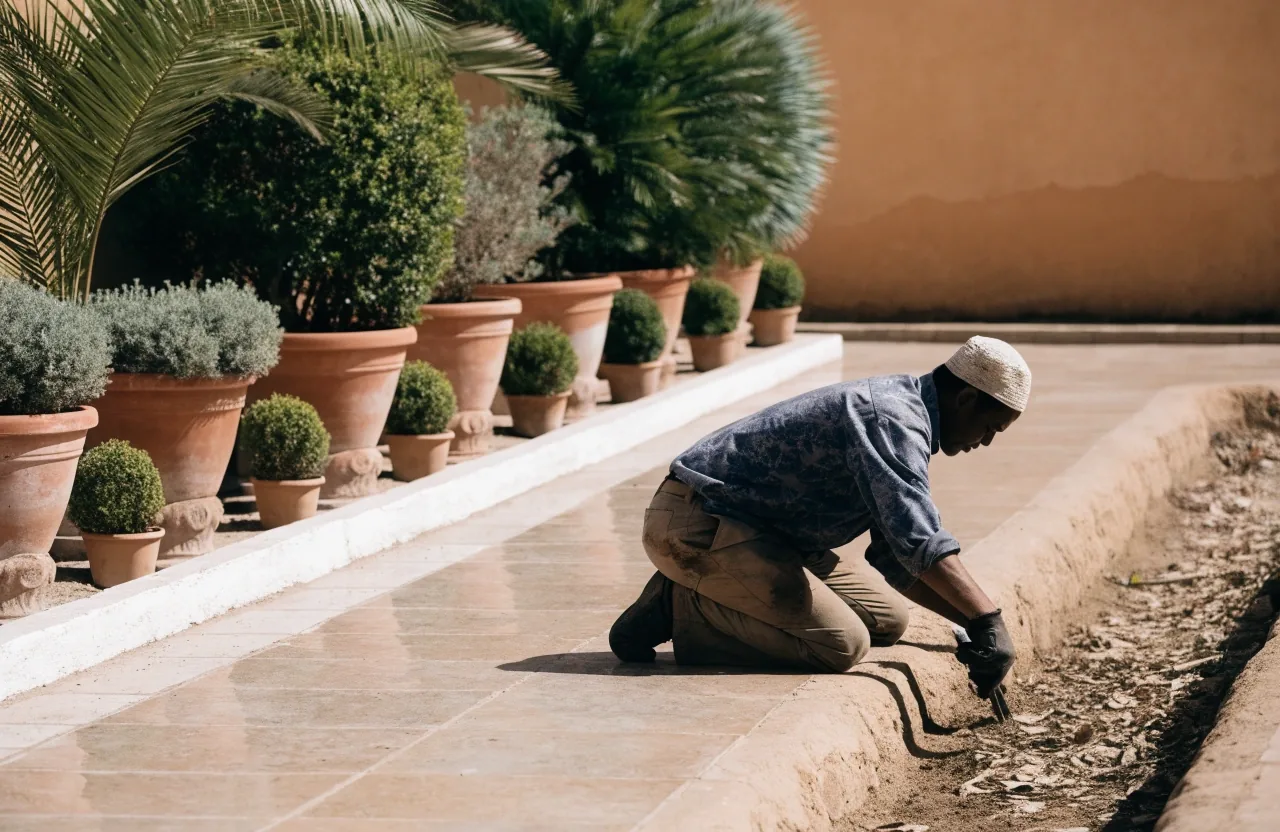
Everyday upkeep: paths, kerbs, irrigation.
The Majorelle Garden is often used as a case study in preserving historic gardens in Morocco. Conservation debates here combine botany, architecture, and patronage, and the site sits inside a city under real urban pressure. Other gardens face similar questions. The 1980 rescue remains the reference point because it shows what private commitment can do when public support is not enough.
If you are comparing gardens on a trip, the useful questions are the same ones conservators ask: who pays for the daily watering and pruning, whether the original planting plan is documented, and whether the site is treated as a monument or as a living collection. Those answers shape what you actually see on the ground.
Questions visitors ask about the history
When was the Majorelle Garden created? Open
Jacques Majorelle bought the land in 1923 and developed it over roughly four decades. It opened to the public in 1947, so the garden you visit is the product of more than twenty years of planting before it ever had visitors.
Where does Majorelle blue come from? Open
It is the intense blue Majorelle used on his studio and garden structures, and it is named after him. It was re-established during the restoration, which is why the pigment still reads as the garden's signature rather than as faded period paint.
What did Yves Saint Laurent and Pierre Bergé do for the garden? Open
They acquired it in 1980 to save it from development and funded a restoration that lasted years. Without that intervention the site was heading toward being lost as a garden, which is why the 1980 date appears in almost every account of the Majorelle Garden.
Is the garden still privately run? Open
It is now part of a foundation-led cultural complex that also includes the Musée Pierre Bergé des Arts Berbères and the Musée Yves Saint Laurent Marrakech. It is interpreted for visitors rather than simply kept as a private retreat.
Does this guide sell tickets? Open
No. Majorelle Garden Guide is an independent travel blog and information resource. We do not sell tickets and we are not the garden's operator — always check the official garden schedule and booking channel before you travel.
Keep reading, or ask us directly
This page covers the sequence from 1923 to the present. If you want the design detail, the Saint Laurent years, or the practical side of a visit, those are their own chapters. If something in the history is unclear, send us a question and we will answer it in plain language.
Contact the editorial desk
Rue Yves Saint Laurent, Marrakech 40090, Morocco
+212 524 95 92 02
info@majorelle-garden-guide.com
Editorial desk: Monday to Friday, 9:00 AM – 6:00 PM (GMT+1). Garden visiting hours vary by season — check the official garden schedule before you travel.