
Photo Gallery of the Majorelle Garden
Photographs of the Majorelle Garden tend to focus on one thing: the blue. That is fair, but it is not the whole site. This gallery walks through what makes the garden visually distinctive, from the studio-villa and its geometry to the planting, water, and architectural details. Use it to plan what you want to see, or simply to get a sense of the place before you arrive.
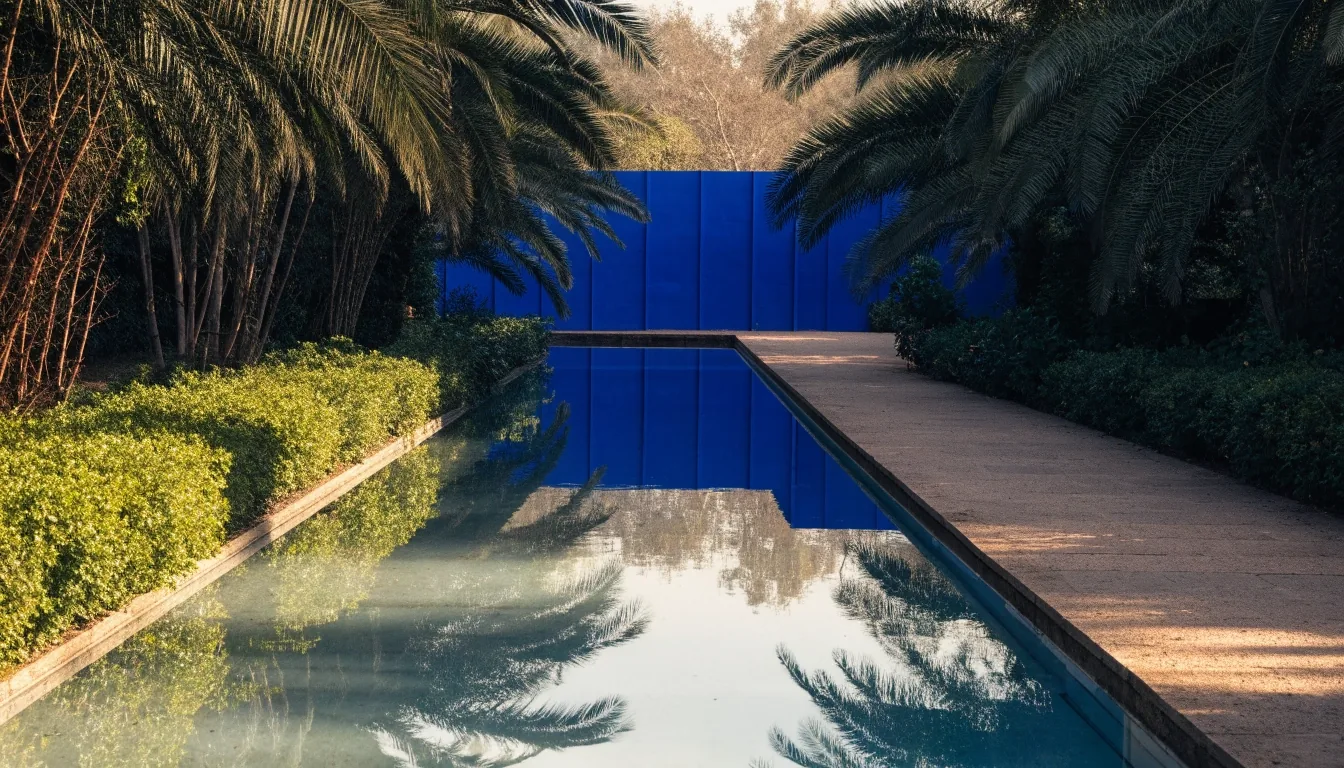
- 01 The studio-villa, photographed from the pool edge where its cobalt face fills the frame.
- 02 The long central pool, still at opening hour before the reflections break up.
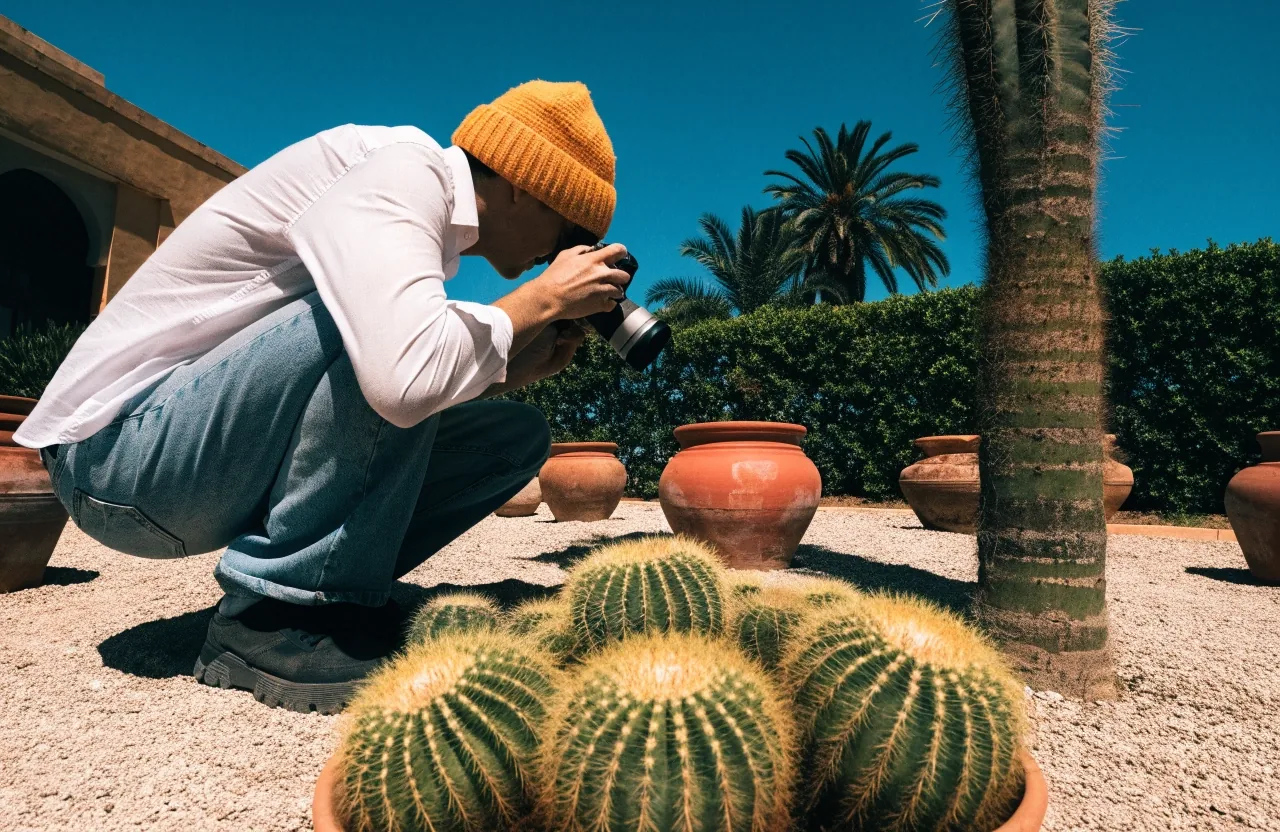
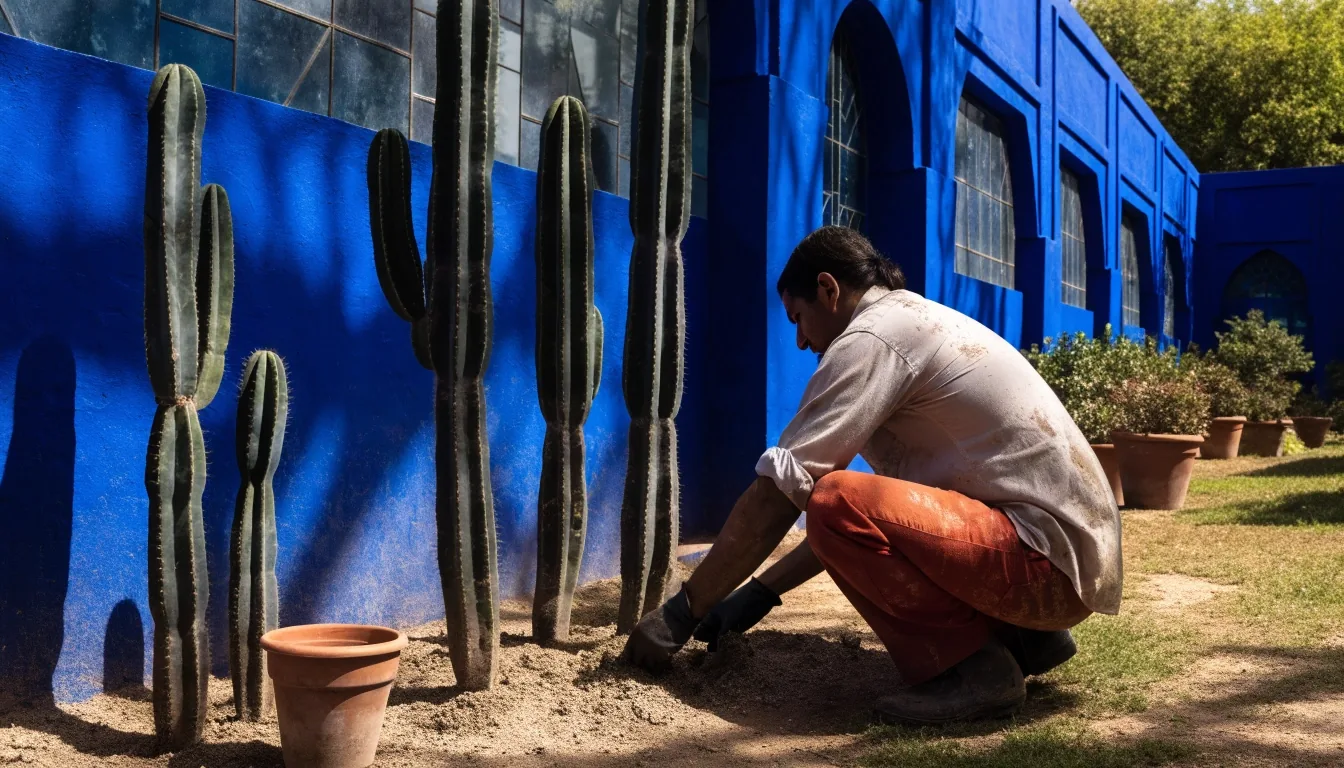
- 03 The cactus court at midday, where the planting reads as architecture.
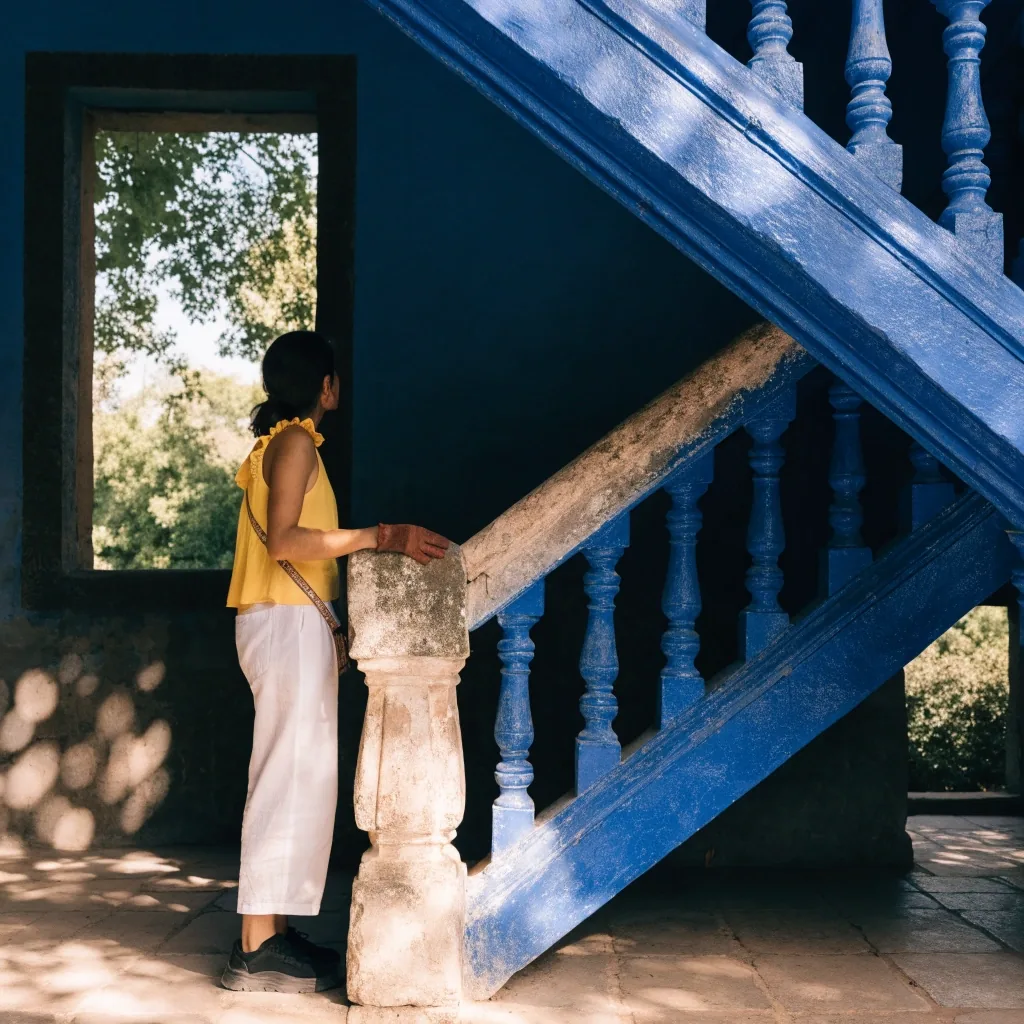
- 04 Art Deco detail at close range: railings, thresholds, and the way walls meet paths.
How to read this gallery
Every set below covers one visual idea from the garden rather than one postcard. Read the note beside the picture and you will know what to look for when you stand in front of it. The garden is compact, so the same route covers most of these views in a single visit; the order here is simply the order they tend to be noticed.
Nothing on this page is for sale. It is an independent guide to what the jardin Majorelle looks like, so you can decide what deserves your time and which corners most visitors walk past.
The blue studio-villa
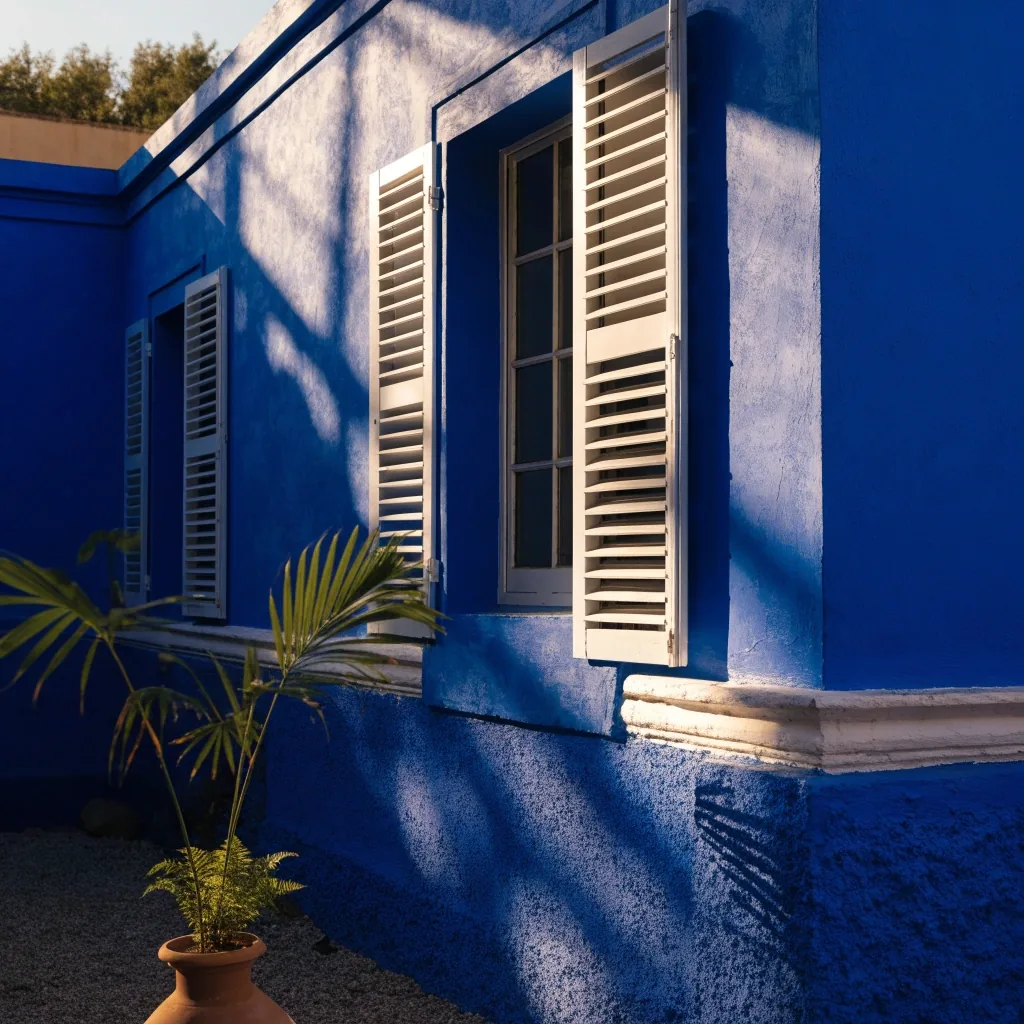
The studio building is the most photographed structure in the garden, and the blue surfaces are the reason. The color shifts through the day as light moves, so no two photographs look quite the same. Look for the geometric lines and framed openings rather than just the flat color. The building is small, which is part of why it photographs so well.
A Where the blue comes from.
The pigment was made for this building, not chosen from a catalogue, and it reads differently against stone than against foliage. That is why the same wall can look deep in one photograph and almost light in another.
B The frames inside the frames.
Windows, shutters and openings cut the facade into rectangles. Stand square to the wall and the building photographs as a grid of its own.
C Why it stays crowded.
The building sits on the main path, so it fills up first. Move along the pool and shoot back toward it instead of standing in the queue.
The long central pool
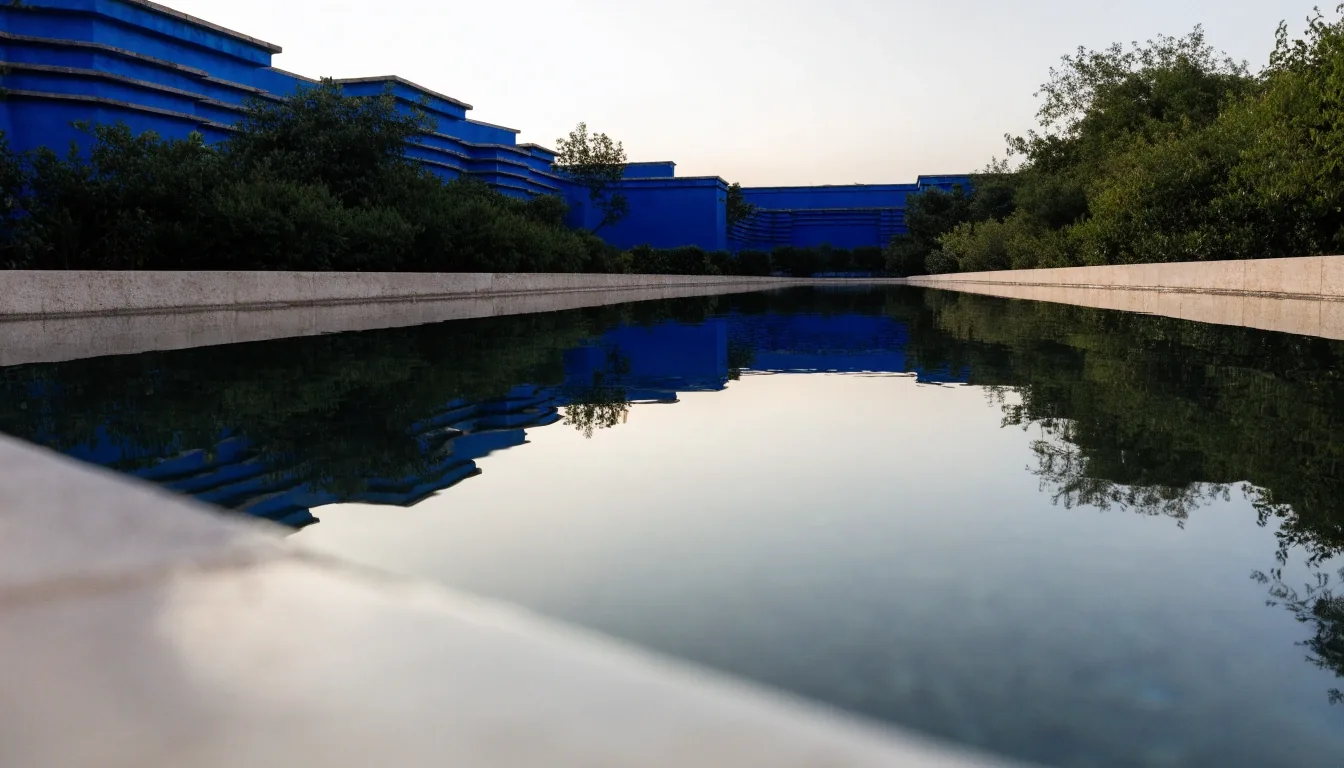
The pool gives the garden its spine and reflects the surrounding structures and planting. It is also a practical feature, cooling the air and organizing movement through the site. Photographically, it provides a foreground that leads the eye. Visit early if you want reflections without a crowd along the edge.
- Reflections are steadiest in the first hour after opening.
- The north bank gives the longest view down the water.
- Wind later in the day breaks the mirror surface.
Planting and botanical contrast
The garden's value lies partly in its plant collection and composition. Palms, bamboo, cacti, and water plants are arranged for contrast rather than neat rows. The layering is what makes the planting read as mass rather than as individual specimens. Look for the moments where two very different plants sit side by side.
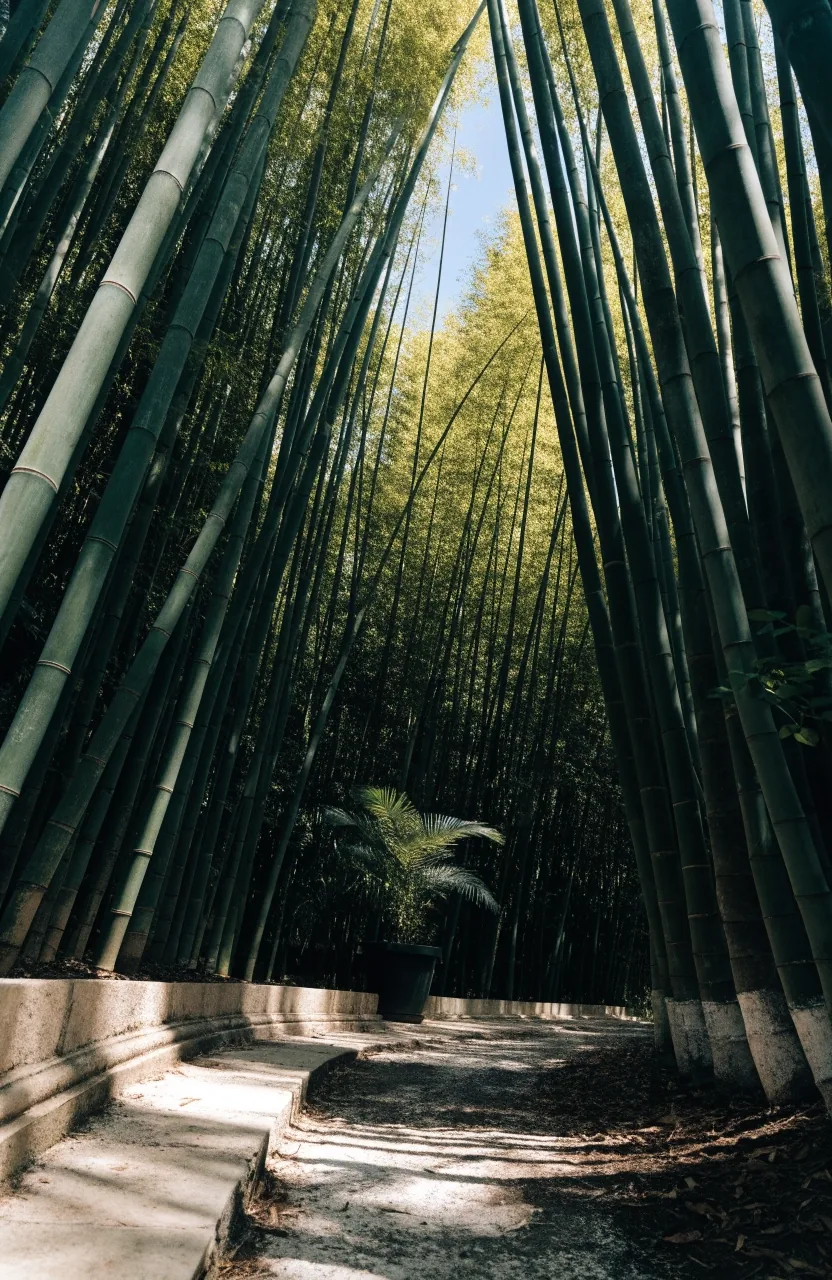
A useful habit here is to frame one plant against another rather than isolating it. The bamboo alley works as a ceiling; the cactus court works as a wall of silhouettes. Both reward standing still for a minute instead of walking through.
Architectural details
Beyond the main building, the details carry the design: railings, thresholds, window frames, and the way walls meet paths. These are the shots that reward close looking. They also tend to be less crowded than the main viewpoints. If you enjoy architecture, budget time for details rather than only the wide shots.
Railings and thresholds
The white Art Deco rails sit against cobalt and read as drawing rather than structure. Shoot along them, not at them.
Window frames and shutters
A frame inside a frame is the cleanest composition in the garden. Stand square, fill the corners, leave the sky out.
Where walls meet paths
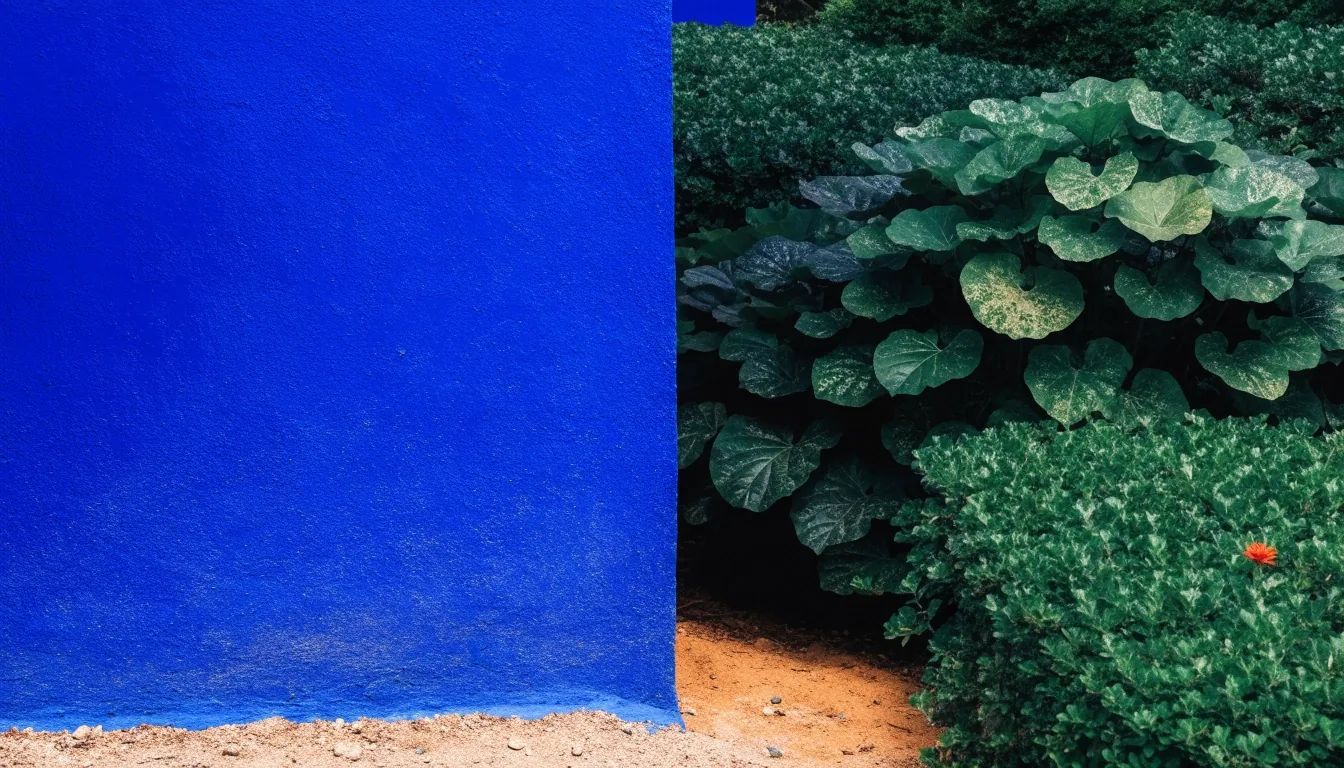
The base of a wall is where the blue, the stone and the planting all appear in one line. It is the quietest good shot in the garden.
Stairs, corners and doorways
Shade and light split hard on a step. Expose for the lit edge and let the shadow go deep.
Water, shade, and light
Shade is a design feature here, not an accident. The garden was built around shaded, layered spaces that make walking possible in Marrakech heat. Light moves across the site through the day, changing how the blue and green read. Photographers often find the best conditions in the morning, when contrast is softer.
What the light does through the day
- Early morning
- Softest contrast of the day. The pool is still and the blue holds its deepest tone.
- Midday
- Hard shadows, strong cactus silhouettes, and the walls at their most saturated.
- Late afternoon
- Raking light along the facade and long shade across the paths. Best for architectural detail.
- Shaded paths
- Cool green light under the bamboo and palms; useful when the sun is too strong to shoot in the open.
Cacti and desert forms
The cactus collection is one of the garden's distinctive elements, and it introduces a different kind of structure than palms or bamboo. These plants are architectural in their own right, with strong silhouettes and unusual textures. They also photograph well in strong light. Look for groupings rather than single plants.
Because the forms are so varied, the cactus court is one of the few places where a wide frame beats a close one. Step back and let the shapes stack against each other.
Colors beyond the blue
The blue gets the attention, but the garden works because of the other colors around it: greens, ochres, and the occasional bright accent from flowers. These combinations are what make the blue read as intense rather than flat. Pay attention to what sits next to the blue surfaces, and you will see why the palette holds together.
If you only photograph the blue, you will miss the reason it works. Green leaves beside a cobalt wall, dry earth under a bright flower — those pairings are the composition.
A composition, not a checklist
The site is often photographed as a composition rather than as a single building. That is a useful way to approach it in person too. Think about foreground, middle ground, and background, and about where the eye is led. The garden rewards that kind of attention, and your photographs will show it.
What photographs cannot show
Still images miss the heat, the sound of water, and the pace of walking through shaded paths. They also miss scale: the garden is more intimate than the wide shots suggest. Use the gallery as a starting point, not a substitute. The visit itself is the point, and it is better than the pictures.
A photograph also flattens the sound of the bamboo in wind and the temperature drop when you step under the palms. Treat everything on this page as a plan rather than a preview, and leave room in your day to simply stand still in one of these views.
Gallery questions
The things readers ask most about the views on this page, answered plainly.
When is the light best for photographing the blue garden?
Mornings give the softest contrast and the stillest water, which is why reflections read best early. Midday is harder for wide views but excellent for the cactus court, where strong light sharpens the silhouettes. Late afternoon suits architectural detail, because the sun rakes across the facade and throws long shade onto the paths.
Can I photograph inside the villa and the museum spaces?
Rules for interiors and exhibition rooms change from time to time, and they are set by the garden rather than by this guide. Check the notices at the entrance on the day of your visit and follow whatever the staff tell you. Outdoor views, paths and planting are the safe assumption for a camera.
How long does it take to see everything shown here?
The garden is compact, so the views on this page sit close together and can be covered in one loop. Add time if you want to wait for a crowd to clear at the studio-villa, or if you plan to sit in the shade. Our visitor guide covers pacing and what to bring in more detail.
Do you sell tickets or take bookings?
No. This is an independent information site about the jardin Majorelle, its architecture and the legacy of Yves Saint Laurent. We do not sell tickets and we do not take bookings. Admission, opening hours and any seasonal changes are handled by the garden itself, so confirm them before you travel.
Where can I read about Yves Saint Laurent and the villa?
The dedicated chapter on Yves Saint Laurent and Pierre Bergé covers their time at the garden and what changed after them. The history chapter sets that against the earlier decades of the site, and the architecture chapter explains the building itself.
Before you go
Garden visiting hours vary by season, so check the official garden schedule before you travel. Our editorial desk answers reader questions Monday to Friday, 9:00 AM – 6:00 PM (GMT+1).
Editorial desk
Majorelle Garden Guide Rue Yves Saint Laurent, Marrakech 40090, Morocco info@majorelle-garden-guide.com +212 524 95 92 02This site is an independent travel blog and informational guide. We do not sell tickets and we are not affiliated with the garden's operators.